

Code On Wages, 2019: Key Implications For Employers
The Code on Wages, 2019 marks a significant overhaul of India’s wage-related labour laws. By consolidating multiple statutes into a single framework, the Code seeks to ensure uniformity, transparency, and timely payment of wages across sectors.
However, its impact extends well beyond simplification, particularly for employers.
Overview of the Code
The Code subsumes the following four legislations:
- Payment of Wages Act, 1936
- Minimum Wages Act, 1948
- Payment of Bonus Act, 1965
- Equal Remuneration Act, 1976
Applicability
The Code applies to all employees, irrespective of wage thresholds, covering both the organised and unorganised sectors.
Key Provisions at a Glance
- Standardised Definition of “Wages”
A uniform wage definition has been introduced. At least 50% of total remuneration must constitute wages. Any excess allowance may be deemed wages by law.
- National Floor Wage
The Central Government may notify a floor wage, below which States cannot fix minimum wages.
- Strict Timelines for Wage Payments
- Daily workers: end of the working day
- Weekly workers: end of the week
- Monthly workers: within 7 days of the wage period
- Equal Remuneration Mandate
Discrimination on the basis of gender is expressly prohibited in matters of wages and recruitment for the same or similar work.
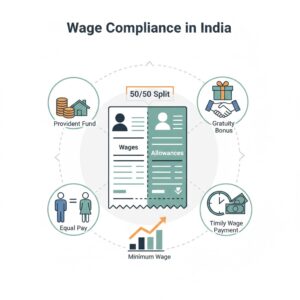
Practical Impact: An Illustration
An employee earning INR 40,000 per month, with a basic wage of only INR 12,000, may face a reclassification of allowances as wages under the Code.
This directly impacts employer liabilities towards:
- Provident Fund
- Gratuity
- Bonus computations
Salary structuring practices aimed solely at reducing statutory contributions may no longer withstand scrutiny.
Action Points for Employers
- Reassess existing salary structures and allowance components
- Ensure compliance with the 50% wage requirement
- Update HR policies, offer letters, and employment contracts
- Align payroll systems and internal processes with the Code
Non-compliance may attract penalties, fines, and prosecution, irrespective of whether a complaint is raised.
Conclusion
The Code on Wages, 2019 represents a substantive shift in wage regulation, not merely a legislative consolidation. Proactive compliance will help organizations mitigate legal exposure, financial risk, and operational disruption.
Early alignment today can prevent disputes tomorrow.